Labels

Monday, April 29, 2019

Rep to your Representative!

In our third unit of Policy we entered our first Action Project Where we had taken a internal/external investigation on what it means to Legislate. In order to understand how a bill becomes a law we had taken a look at the similiraties and differences that both hold. Once we had understood the construsct of a policy in terms of a bill and a law we then analyzed policies that are placed by the people in “power”. This had helped us look further into how positions, branches, and jobs create a system of checks and balances. Checks and balances was a important term to understand when it came to looking at the history on how war is declared to how an aldermanic power in Chicago shapes our neighborhoods. For our FE we went to the Chicago City Council and met with officials and we also met with Alderman Elect Andre Vasquez in his office in Andersonville. Both of these Field Experiences helped us understand the structure of how a bill gets discussed , which we had then seen that it all comes to a group of people gathered on a table. This smoothly brought us where we are now. For our action project we wrote a letter to a representative of our choice wether it be your alderman, state representative, or the president we all had to search up a legislation that the person of your choice can sign off to. Our letter will then be composed to talk forth on the bill to your rep in an argumentative form we had learned in our last unit Argument

Dear Mr. Lipinski:
   
I am writing today to urge you to sign off to technical changes regarding the Higher Education Student Assistance Act concerning the Act’s purpose.This bill was rushed to attention by state representative Bob Morgan who advocates for the protection of education in Illinois.                
This bill protects the following: the value of higher education for all Illinois residents. This bill also points out the increase of qualified persons who desire higher education and the main detrant being the financial cripple. And his most eager importance, to provide physical support in the areas of desert sand opportunities and resources.
I am under the category of a low income brown kid from the southside of Chicago. And I can affirm people like me have fallen victim to the malpractice of middle class or higher income families taking my educational resources. I am at the moment in the position of aiming for higher education and have been crippled by this for my journey to finding financial support. Middle class or higher hispanics are thrown in with the experiences of that of lower income hispanics. This has made riffs in our own communities but mainly the one that is of great concern for the future of low income hispanic, is the opportunist in those middle class or higher communities. With this bill it can create separate funding and appropriate measures for all types of backgrounds. My main personal issue is the problem of opportunists of that creates a survival ofthe fittest mentality. An average higher education University in Chicago grants around 70,000 to a the income family of 0-30k, there has to be a lower alternative. That is a huge gap of people and experiences that need to be breached. Higher education institutions give no guarantee that the cost will diminish so the need based programs need to increase. 5 percent of scholarships are race based, only 5 percent. This is not enough room for representation, for growth within the minorities communities with such a low number. Being a 5% it is very unlikely that there are many programs that specify even though something as basic and possible distinctions of a 1st and 2nd generation hispanic. With this bill we will make a plausible for that 5% to increase and grow fruitful.
It's not about making the rift between these communities bigger but the adequate resources for the all the different backgrounds. With this bill being signed there would an influx of resources thus creating the ripple of all different kinds of programs. There is always the obvious set back to this specifically within my community, the notion that “,all hispanics should stick together and we are all the same!” To that I say yes I agree, we should all stand together but to further progress as a community we must understand each others struggles and differences within our own communities, that being the huge difference of being a low income hispanic and a middle class\ or higher hispanic. In conclusion this bill will have huge positive ripple effects for all communities. With the starting support of the technical changes regarding the Higher Education Student Assistance Act concerning the Act’s purpose. I am Genesis Andrade allow me to introduce myself.

Monday, March 25, 2019

A People's Assembly: The Structural and Cultural Dynamics of Neighborhood

For our last Action Project on A Nation's Argument we had explored how a synthesis is seen in an argument. We looked at how it effects social change by stepping back into time during the 1960's a time of action. Our classmates had focused our learning in building our own call for action by conducting a Peoples Assembly. Our junior class had done an Peoples Assembly on policing where we had a former officer, organizations ran by concerned parents and education leaders who connect with Civilian Office of Police Accountability. This was assembled to talk on the issues related to Policing. This was a surreal experience that helped us experience how a dialect performs in a real life setting that has people with opposite to similar ideas as you. This experience had shaped perfectly into our internal and external learning where we got to connect our experience into what we learn as if we conducted our own Field Experience. For our action project we were able to pick a topic we resided with that was talked in the Peoples Assembly. I chose to talk about the Latinx communities by speaking on the issue of simulated traditions in lower income neighborhoods.

Friday, March 22, 2019

Pinocchio's Cuckoo Clock

For our last action project in Light, Sound and Time we dove into TIME!. In this unit we learned a lot about tools that tell time an how it has shaped our lives. We looked at longitude and latitude, sundial, pendulum, and checked out several other tools that tell time at our FE trip to the planetarium. We then swayed our focus on how time is measured in our lives by thinking about how is it beneficial to us. We then started to design our own clocks for our Action Project. This lead me to make the lying clock... hence the Pinocchio Cuckoo Clock.


In conclusion this Action Project was one of the most memorable material. The concept of translating time through science and math was a mind opening experience for me. I had a lot of fun making this video! and being bale to express my creativity in a STEAM class was an overall positive opportunity. 

Wednesday, March 6, 2019

Citizenships Standardized Testing

In our second unit of A Nation’s Argument we had went back through time to the 1850s to discover how does a nation contradict itself. In order to create our own antithesis we had previously analyzed several documents such as The U.S Constitution, Bill of Rights, the Dread Scott case and the Naturalization test. This perfectly flowed onto our external investigation where we had the opportunity to sit on a City Council and Immigration asylum services hearings. Having the opportunity to physically be where change is made was a great inspiration booster to start on our arguments. This action project was based off the Naturalization test where we had to amend the questions based off what contradictions we think the test faces. I was personally inspired by the fact that my family are immigrants and had gone to a process of citizenship, I wanted to base this project off of my personal experiences that had formed my opinion as to why the test should be amended. 

The naturalization test is a step towards citizenship... in the case that you pass. The one hundred questions are stated to construct importance in becoming a progressive citizen in the United States. To hold such prominence in what it takes to be a citizen specifically in the United States we expect these questions to grasp the entity of an American progression economically and socially. Whether your truths coalesce or collide I amend these following questions taken from The Naturalization test to be clarified for the sake of the United States and most importantly the immigrant's moral discourse.


The proposed amended questions;


52. What do we show loyalty to when we say the Pledge of Allegiance?


53. What is one promise you make when you become a United States citizen?


55. What are two ways that Americans can participate in their democracy?

These questions segment citizenship to be a traveling physical change as if an immigrant took a trip to a candy store trying to figure out which flavor tastes better. As professor Freeman said in a lecture on the progression of the declaration of independence, "the colonies declaring independence feared the feeling of being detached and disembodied from themselves as they leave their lands principles" This brings up the same connotations being formed on the naturalization test. We as a country are stating that immigrants who are seeking sustainable independency aren't capable to characterize the principle of a citizen. Having to face the mental breakthroughs of an immigrants position amplifies when asked to detach themselves from their rooted cultures and laws when we can simply create an altar to the melting pot. The alter will consist of questions that root their country alongside united states asking how will they participate their loyalty to a new system by bringing in their personal passions and culture. By doing so we support the immigrant's breakthroughs and obtain economic and social progression. This will serve as an opposing act towards Morse views that shaped up the know-nothing party during the 1800's. By 1850, roughly 10 percent of the U.S. populace was Roman Catholic. Numerous local brought into the world Protestant Americans started to expect that the United States was being overpowered by Catholic settlers, and some even trusted that the pope needed to colonize the United States so as to expand his power. Morse views had escalated quickly after influencing the “Know-Nothing” party. In the 1840's the Bible Riots had killed several Catholics, immigrants, churches,and Holmes. This is to say the naturalization test hits these subliminal messages that harm what’s to expect of becoming a citizen.

I will clarify these questions to build citizenship as a characteristic…


52. How will you express respect to the Pledge of Allegiance alongside your blank countries principles?


53. How will you use United States resources to obtain economic and social willingness?


55. How will you serve your political standpoint?

The Naturalization Test syllogism:

P1. Citizenship is a physical measurement.
P2. The following questions hold no progressive substance.
P3. Forms Morse views
C1. Therefore The Naturalization Test segregates immigrants abilities. 

The Amended Naturalization Test:

P1. Adapts their roles as citizens in their countries.
P2. Following questions holds economic and social progress.
P3. Provides partnership and safety nets. 
C1. Therefore citizenship is an characteristics trait.

Co-Sign: 
Relationship: Brother
Printed Signature: Daniel Andrade jr the third


rock and roll with a deadly bow

This is my second unit venture for my class Light, Sound and Time. In this unit, we learned about sound, and how we collaborate with this idea in our everyday life as a part of nature. By doing so, we figured out how the ear functions, and how speed, wavelength and frequency. We've figured out how to quantify a high/low frequency and amplitude, in addition to that we realized what the sonic boom was, the edge of hearing, the Doppler effect within the works of a guitar. We then went on a field experience to the Chicago Music Exchange where we talked with professionals about the technicalities of the instruments specifically guitars. This led us perfectly into the action project. For this venture we made a Diddley Bow, helping us figure out how guitars work , with sound waves, notes and vibrations. Stick around and you will see my process in discovering sound on a Diddley Bow.
What is a Diddly Bow?

A diddly bow is a single-stringed instrument that consists of a wire tied between two nails and a battery on a wooden board over a tin can. The tensioned string touches the can, and the nut is where the battery touches the string. This is both used as a bridge and as an amplifier. The outcome will represent the acts of a guitar.

GA, "Sketch", 2019


GA, "diddly bow", 2018


How does a diddly bow make sound?

A diddly bow makes sound by plucking the guitar string that.is wrapped tightly by the nails and battery creating vibrations. These vibrations are what makes the diddly bow have low volume. In order to amplify the low sounds we added a tin can to act as the hole in a guitar creating stronger amplified vibrations. 

GA, "harmonics labelled",2018


How do we perceive sound?

A very important science principle is how we hear! This process starts with sound waves entering our ears through what is called our Pinna. Sound waves then travel through the auditory canal which condenses the sound waves to be smaller. The condensed sound waves then enter the eardrum where they start to vibrate causing the little bones called the ossicles to move. The ossicles then change the vibration into electrical signals by the little hairs in the cohclea. Which then send signals to the brain allowing us to perceive sound. Now the way we distinguish these sounds in terms of volume has to do with sound waves' high or low amplitude. Lastly to distinguish the pitch the sound waves are measured in a low or high frequency.  

What are Harmonic Waves?

A harmonic wave is a wave with a frequency that is measured in whole numbers. In order to calculate my harmonic waves I first measured the frequency by plucking my single string and putting it up to my computer. using this information I was able to find my wavelength to then calculate the harmonics.
Step A:

GA, "wavelenght", 2018


Step B:

GA, "Harmonics", 2019
 Precise Sound Building

This showcases the measured data to calculate the diddly bow angles.

GA,"data",2018


JAM OUT!

Thursday, February 14, 2019

Looking Through The Lens

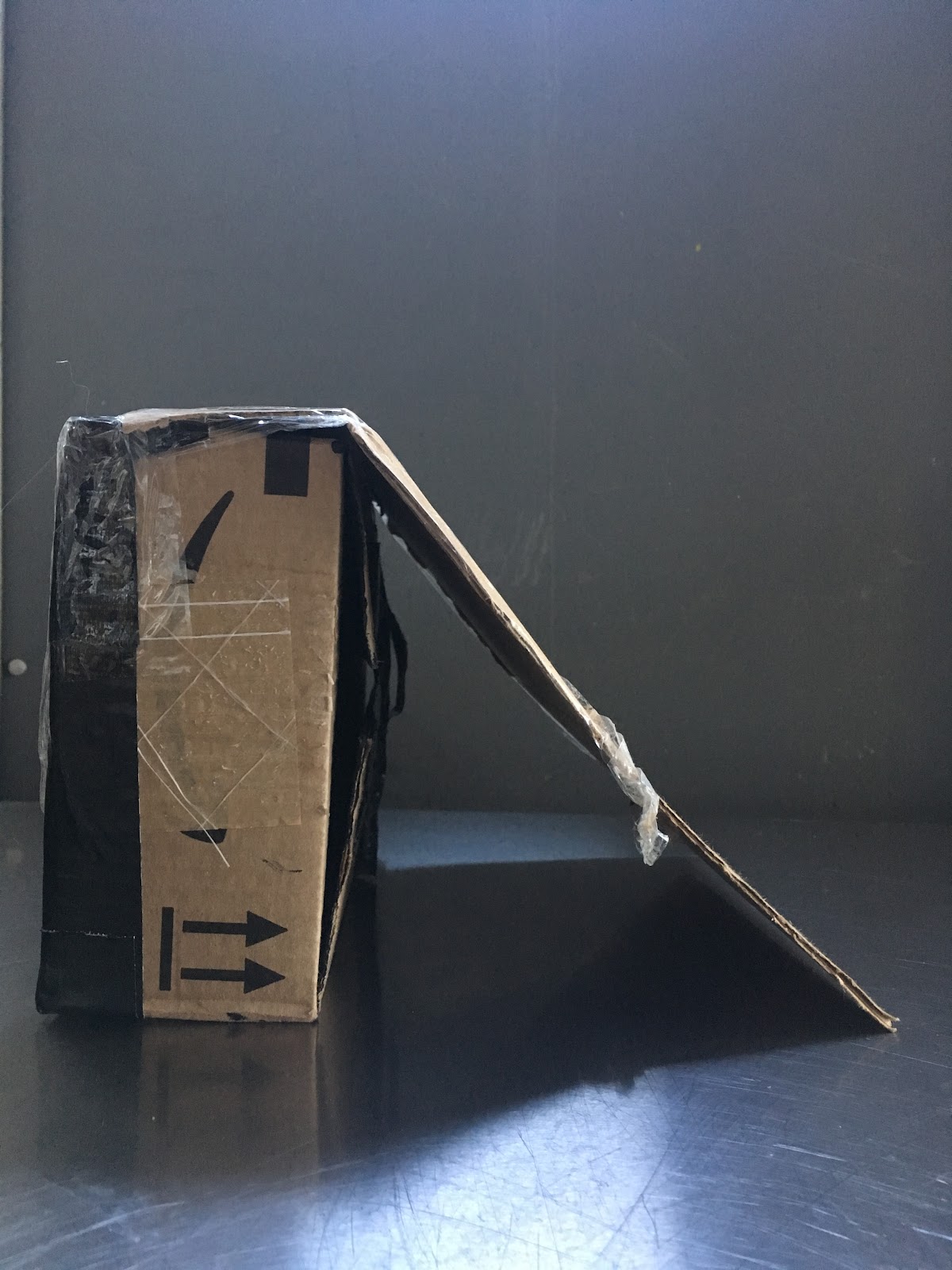
This is the first unit of my Junior STEAM course Light Sound and Time. In the first unit, Light, we learned about, light!..what a shocker. We learned about the mechanics of electromagnetic spectrum and light waves. We also did some magic with trigonometry where we studied unit circles, similar triangles, and sine and cosine waves, as well as other equations in the branch of measuring waves in distance/angles. Our class also went on a Field Experience were we went to The Latin School to meet with their photography teacher Ms. Ross. We used their darkroom to develop our pictures. This FE was an important task to take in regards to or Action Project. For the first AP, we made a pinhole camera. We made the cameras in class and afterward took them to The Latin School where we took and built up the photographs. We at that point needed to figure the light and separation between the focal point and the subject we snapped a photo of in order to do our best in creating a functional camera. Although the odds were not in my favor on creating a functioning camera, it doesn't take away from the amazing experience I had.

Looking Through the Lens

How Does A Pinhole Camera Capture Light?
In order to figure out how a pinhole camera captures light, we will have to understand the fundamentals of light. Light is neither a particle or a wave as it is a duality of both meanings that light displays properties of waves at times and properties of traditional particles in others as light can be absorbed and changed by magnetic fields. Knowing this we can have a better sense on how light works when being perceived onto a camera. A pinhole camera is a kind of straightforward handcrafted camera. It comprises of a lightproof box, a manual screen, and a focal point. The pinhole camera can take pictures by setting your subject towards the camera and putting film inside the camera. At that point, you let light through the pinhole which lets a little measure of light into the totally dim camera, where the image gets absorbed by the film. The film is then created, and in the event that it works, you have successfully captured your subject. But in order to do so, the importance comes to the camera being completely light proof. The dark within the camera ensures all the light is ingested and the main light coming through will be through the pinhole. This will then ensure your image in picking up the independent light that we want. Once light gets into the pinhole camera we were asked if the light itself works as a reflection or refraction. By knowing that refraction can only occur when the light changes it's medium to another and that a reflection can only occur when the light is being reflected off we can conclude that a pinhole camera doesn't work in any of these ideas. A pinhole camera doesn't ever change it's medium as it's only going from air to air and we can also assure that the light from the pinhole camera absorbs the film instead of bouncing off or else there wouldn't be an image to see.

I chose to make my pinhole camera out of a box not knowing the challenges that come with it. Like I had stated up top its important to ensure that your box is lightproof in order to manipulate the light being captured. My box had several holes and folds that needed to be sealed and painted all black. I then took a vacant soft drink can and cut a hover out of it with an X-Acto blade. At that point, I utilized a stick and jabbed an opening through the aluminum to then sand it with sandpaper so everything was smooth. This became a hard task when it came to dealing with creating a seal that can open and close just like shutter would do on a camera. I ended up creating a flapping opening to work as my shutter.

The After(MATH)
Since the pinhole camera is low tech we needed to see for ourselves how far the subject has to be in order for the film to capture the entire subject. In order to receive this information, we measured the height of the tallest object, the height of the pinhole and the distance between the pinhole and the film. With these three measurements, we can know the distance of the object to the camera. 

GA, "calculations", 2019
Finished Product

GA, "Pinhole Camera", 2019
GA, "Image Captured", 2019


Wednesday, February 13, 2019

I Declare a People Watching Course!

This is the first unit of my Junior Humanities class A Nation's Argument. In this class, we are learning about the fundamentals of an argument by analyzing The Declaration of Independence. We learned about premises and conclusions as well as inductive and deductive reasoning. These are all key tools in forming a solid argument. We also took part in Yale University's online lecture series. We participated in a lecture on American history from Professor Freeman where she argued her take on the Declaration of Independence. We then read a passage from A Peoples History of the United States where Howard Zinn argued his take on The Declaration of Independence. We compared and contrasted the views of Zinn and Freeman where they had discussed if the preamble or the grievances were the most important in Jefferson argument. We had a Field Experience where we went to the Daley Center in Chicago. We participated in their Black History Month tours where they let schools experience a hearing in a courtroom. For this action project, we declared our independence. I chose to exercise my right by declaring an independent study on people watching!
The Declaration of Independent Study: People Watching

I am a student exercising my right as I announce our Declaration of Independent Study. Going against the social control comes in many aspects one being the 1800's rebels, Flaneur. The concept of the flâneur, the casual wanderer, observer, and reporter of street-life in the city also known as People Watching. In a city that attempts to change at the speed of time, a stroll that went with time and passed by seconds and seen in stills were seen as scums. Flaneur was the arch-conservatives with a serrated change of an awakening, as Benjamin describes in “The Arcades Project”, “Empathy with the commodity is fundamentally empathy with the exchange value itself. The flâneur is the virtuoso of this empathy.” Detaching oneself from a continuous routine is in our nature. The same nature that questions is the nature we possess to act on our aptitude.

Learning starts when students develop ideas not the absorption of comprehension as if deliverables were the physical health exams to “check-in”. Ideas take place in all means, at all time and everywhere. An Adapting education can take numerous structures, for example, formal, casual, and non-formal and happen anyplace whenever. whoever we are, wherever we live we are given chances to learn regularly of our life. People are learning all through life, as life is learning people all through. GCE Lab school withstands with the principles of establishing innovative learning spaces, the school was founded by the same rebellion instinct of a capitalistic structure of standardized learning. That being said this accentuates the nature of peripatetic style (see Vergunst 2017, this issue). The figure of the flâneur catches a sense of inertly strolling in the city, with no particular goal, enjoying the act of strolling while at the same time mentioning objective facts on urban life. As a meandering figure who was traditionally gendered and elite, he represents the look of advancement which is both “covetous and erotic”(Pollock 1988: 67). This routine with regards to transgressive urban walking(Martínez 2015) has been stretched out to incorporate the female flaneuse (Richards 2003), as well as the impaired flâneur (Serlin 2006), meaning its job as a persuasive figure, beyond its manly connotations. Flanerie, the demonstration of the flâneur, has motivated writing, film ponders, craftsmanship history and practice, urban investigations and human sciences. It urges individuals to draw in with questions identified with the critical engagement of a cutting edge city. That being said the ways of a wanderer explores your inner self as much as it does in your environment. The concept of flaneurism makes up the meaning of learning. That being said I hold these Truths to be self-evident, that quality learning is ubiquitous, that they are endowed by nature to revolt.

I will pursue my means to explore my independent study by discovering the following Guiding Questions:

How did Flaneurs contribute to society?

Who is drawn to the Flaneur concept?

Who is deterred to the Flanerie?

How did the Flaneur method influence the arts?

GCE Lab school urges understudies to utilize their voice to take responsibility for learning. By following similar rules I declare my entitlement to think about outside the dividers of a classroom and wander the avenues utilizing the Flaneur strategy. My recorded suggestions will legitimize my rights.

P1. Peripatetic practices perform well-rounded learning.

P2. GCE Lab school encourages innovative learning spaces.

P3. Flaneurs detach themselves from a capitalized structure just like GCE detachment from standardized learning.

P4. Flaneurism influences fields of anthropology, sociology, and human geography, as well as artistic practice and subjects more commonly found within the humanities.

In order to absorb as much from my experience I will require the accompanying sources:

- Permission slip allowing me to leave GCE to roam the city

- Student Ventra card

-Art Institute of Chicago exhibition, The Flaneur: Kunstmuseum Bonn

- “Charles Baudelaire: A Lyric Poet in the Era of High Capitalism” written by Walter Benjamin

-“Key Figure of Mobility: The Flaneur” written by Jamie Coates

-“The Flaneur, the Sandwichman and the Whore: The Politics of Loitering” written by Buck Morss

I, therefore represent as a student to solemnly publish and declare, That I have the right to make the city my classroom by utilizing the Flaneur strategy.


http://blindflaneur.com/contact/browse-the-archives/tutelary-spirits/the-return-of-the-flaneur/

Works Cited

“Baudelaire, Benjamin and the Birth of the Flâneur.” Psychogeographic Review, 13 May 2014, psychogeographicreview.com/baudelaire-benjamin-and-the-birth-of-the-flaneur/.

kul, Tapanshu. “Morss 'The Flaneur, The Sandwichman and The Whore: The Politics Of Loitering'.” Academia.edu - Share Research, www.academia.edu/24817800/Morss_The_Flaneur_The_Sandwichman_and_The_Whore_The_Politics_Of_Loitering.